Why love languages matter
 einav avni
If love, relationships or friendships feel like hard work, here are some ideas that can help make them better, or more in flow (March 29th 2026)
It's funny how this conversation is doing the rounds in my household. Every once in a while, someone would do or say something that gets us all in a frenzy about the love languages and how we follow them.
Before I continue, let me just share with those who are not so familiar what the 5 love languages are.
The 5 Love Languages were coined by Dr Gary Chapman in a 1992 book called The 5 Love Languages: The Secret to a Love That Lasts.
The languages are (in alphabetical order):
- Acts of service
- Gifts
- Touch
- Quality time
- Words of affirmation
The idea here is that every person has a way of knowing when they are loved, and also a way in which they show love. These ways could be the same, or they might be different. We mostly have all of these, but have one way which is our primary love language and one that is secondary.
What do these languages mean, more specifically?
1. Acts of service - doing something for the other person / having something done to you (for example, having their tea ready for when they get home)
2. Gifts - big or small, expensive or not, it's the act of giving something tangible when the opportunity arises.
3. Touch - not usually the sexual way, although this can be a part of it. Mostly cuddles, strokes, or a pat on the shoulder
4. Quality time - time spent together doing something meaningful. From the big things to the smaller ones (Building a sand castle or reading a bedtime story, for example)
5. Words of affirmation - the words that show you that you are being seen and celebrated. For example, well done, you did well there, etc.
It will be an interesting thing for you to take a moment and ask yourself these questions:
1. How do I know I am loved (what does someone need to do so I know they love me - sometimes you will get there by asking the opposite questions - what is not there when I feel unloved...)
2. How do I show my love to other people?
3. Thinking about all the important people in my life - do I know their love language?
4. (and a jumping ahead question) Am I showing them love in the way they want to be loved, or by the way I do?
Knowing the love languages is best used to enhance relationships, not to use them in psychological warfare. Meaning, use them to show people you love and care about them, not to punish them when they're not doing what you want from them!
When you know your primary love languages, you can communicate these to your people and have them tell you about theirs. If you thought they feel loved by being touched, but they really crave words of affirmation, you will see how easy it is for them to feel like you don't really care (even if you think you really do...).
The 5 love languages are a part of what you may want to consider when you are in conversations or relationships that feel a little strained or that don't flow as well. You can use them with your partner, kids, parents, colleagues, neighbours, and anyone else you are in contact with.
A word of recommendation, though, these languages are just a small part of things you can do to improve, but I wouldn't use them in isolation, and a conversation is always nice as a way to establish a deeper connection.
These love preferences can change at times, too, which brings us back to the original conversation I mentioned with my daughters. We like to check in with each other to see if we still know which is which for each of us. As teenage years are still upon us, sometimes a new language of 'let me offload my frustration on you' is also brought forward, which is then met with 'I'll allow it, but watch it' kind of love! :D
So... what do you think?
- Is this helpful to consider?
- Do you know what your love languages are?
- Do you know when you're getting the wrong language? ( for example, at work, when you want to be celebrated with a time off but your boss brings cake to the office...)
- Do you know what you can do differently with some of your loved ones?
Have fun!
This week in Healing Conversations
69c79344d1324_lg.png)
This week, my planned guest couldn't make it (he will return in mid-April), so I took to the stage to deliver a conversation that has its base in client conversations I've had this week.
In this inspiring session, we sit down with Emily Stein, a former professional dancer who transitioned from a lifelong career in ballet and choreography to becoming a certified Feldenkrais Method practitioner. Together, we delve into Emily’s personal journey of managing pain, rediscovering movement, and finding true physical and emotional freedom through this unique approach.
You’ll hear Emily Stein share her experiences moving from chronic pain and the world of high-pressure dance to a more mindful, healing way of engaging with the body, and how her work now helps clients find greater awareness and relief. The conversation explores the Feldenkrais Method's focus on exploration rather than "fixing", the importance of agency and choice in movement, and the profound impact these principles can have on our emotional well-being and self-image.
This conversation is a collaboration with Tribe Healing Arts: Tribe is a community for holistic practitioners and wellness professionals seeking connection, support, and sustainability in private practice. They bring practitioners together for peer support, business guidance, and provide shared visibility through a practitioner directory and a Chicago-based studio space. At the heart of Tribe is the belief that community makes running a practice and providing healing services more sustainable and more enjoyable. https://tribehealingarts.com/
More about Emily:
In this inspiring session, we sit down with Emily Stein, a former professional dancer who transitioned from a lifelong career in ballet and choreography to becoming a certified Feldenkrais Method practitioner. Together, we delve into Emily’s personal journey of managing pain, rediscovering movement, and finding true physical and emotional freedom through this unique approach.
You’ll hear Emily Stein share her experiences moving from chronic pain and the world of high-pressure dance to a more mindful, healing way of engaging with the body, and how her work now helps clients find greater awareness and relief. The conversation explores the Feldenkrais Method's focus on exploration rather than "fixing", the importance of agency and choice in movement, and the profound impact these principles can have on our emotional well-being and self-image.
This conversation is a collaboration with Tribe Healing Arts: Tribe is a community for holistic practitioners and wellness professionals seeking connection, support, and sustainability in private practice. They bring practitioners together for peer support, business guidance, and provide shared visibility through a practitioner directory and a Chicago-based studio space. At the heart of Tribe is the belief that community makes running a practice and providing healing services more sustainable and more enjoyable. https://tribehealingarts.com/
More about Emily:
I came to the Feldenkrais Method® from the world of professional dance, where I worked for decades dancing, teaching, and choreographing in Chicago, IL. When I retired from performing with a professional company in 2011, I had many “old dancer” issues: a cranky hip, arthritic toes, stiffness in my feet and back. Getting up in the morning involved a ritual for preparing myself for the discomfort that came with standing up. While I was always committed to regular bodywork and to strength and conditioning training, I feared that the pain I was in was inevitable.
As I looked to my next chapter, I decided to follow my curiosity about movement. My dance career had exposed me to many somatic modalities and practices, but the Feldenkrais Method® just seemed to fit me. The more I studied it, the more my body healed. I wasn’t stiff every morning, I could teach ballet class or exercise with much more ease than I had in years. And as the inevitable aches and pains of life and ageing crop up, the Feldenkrais Method® gave me an approach for figuring out what I need.
I completed my training to become a Feldenkrais® teacher in 2017. Since then, I have built a private practice teaching Awareness Through Movement® classes and doing private Functional Integration® lessons with individuals. I have taught the Method in higher education, in professional dance settings, and to the public. My client circle encompasses performing arts professionals and other adults looking for better movement and relief from injuries and chronic pain.
Social links:
1) https://www.emilysteinfeldenkrais.com
2) https://emilysteindance.com
3) https://feldenkrais.com/not-opposites-ballet-training-and-the-feldenkrais-method/
 | 697e20140c7fe_lg.png) | 697e202c4e5ee_lg.png) |
Next week in Healing Conversations
Next week, I’m in conversation with Jeanne Comeau about 'Soul Purpose Astrology: Healing Chronic Struggle Through Alignment'. Jeanne will share about Evolutionary Astrology and the incredible insights it brings to clients' lives as they transform into aligned living and harmony.
You might also be interested in...
This showed up on my feed, so I thought you might be interested in this, too:https://www.youtube.com/watch?v=hRt_Qab2FCY
Dottie's Corner
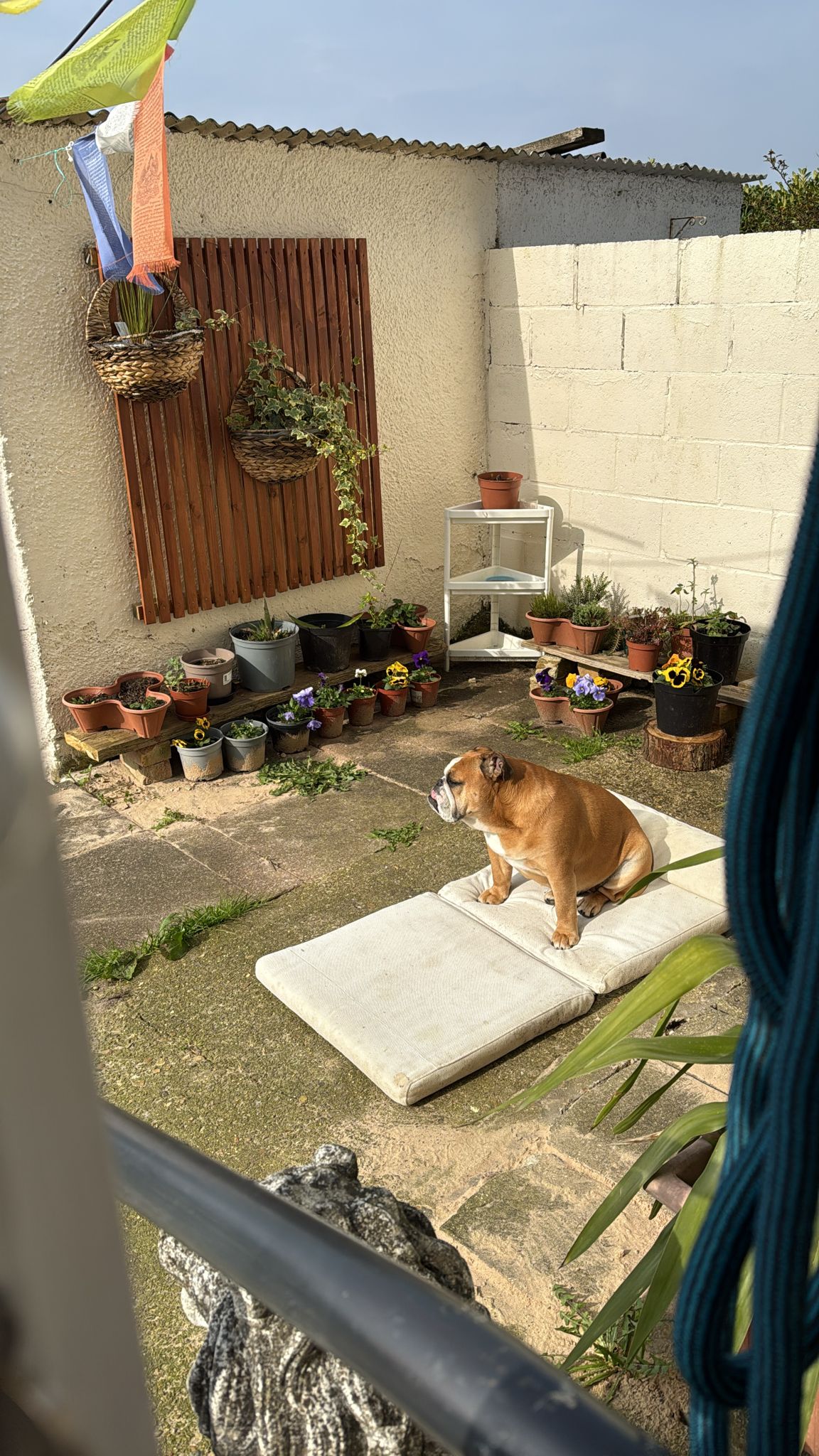 | This is me, doing my own version of the Sun Salutation Pose. Sitting outside, minding my own business, and waiting for the neighbouring dog (the one living just behind that wall) to come out, so I can show her my latest achievement in barking volume. The dog next door doesn't seem to follow the same mind-body-soul regime that I do, but hey! Each to their own... |
I work extensively with people to help them transform their lives from fears, limitations and compromises, to harmony, alignment and joy, or in other words, helping people find natural healing to mind, body and soul.
To chat about your own situation and how my methods can help, please book a chat using the link: https://calendly.com/einav-4/coaching-discovery-call
einav x