Your potential is better than mine. Or is it?
 einav avni

What stories are you bringing up when an action or a decision is needed? And how can other people help motivate you by seeing things you can't (Oct 10th 2026)
 | 6a6c9919e80e7_lg.png) |
A few months ago, I was in the starting phases of a new program I am putting together. After spending some time on various aspects, I decided to consult my sometimes friend, ChatGPT and see what it had to offer in terms of strengthening the foundations I already set in place.
Two things became immediately clear.
The first was that it thought very highly of me, my work, and everything I put in front of it...
The second was that it didn't understand anything about what I do, what I am offering or what I was trying to achieve.
The program continued being put together old school, but as always, this made me think about the gap between the way we see ourselves vs the one other people do... And why it might be in our own interest to listen to what other people have to say. The right people, I should add...
When we reach a decision point in our lives (and this can be absolutely anything), we don't just bring the potential of what we want to do. We bring everything else too. Everything we've already done, tried, failed at, paid for, and all the lessons we've collected along the way.
Some of those lessons are valuable. Others might have left us with the conviction that we're not good enough, that we should know better by now, or that before we take another step, we'd better find a way to get a written guarantee that things will work out.
And that's where another pair of eyes can be useful.
Someone who can listen not only to what we're hoping to do, but also to the things we say when we explain why we can't.
Someone who can hear the hesitation behind our reasons, or notice that we're dismissing something in ourselves that we'd recognise as a strength in someone else.
Because when we're looking at ourselves, we see the whole history. We know all the reasons something might not work. We know where we've stumbled before, and we can be very good at using that information to convince ourselves not to try again.
Other people don't necessarily carry all that history with us. Sometimes, they can see possibilities that we've stopped seeing, not because those possibilities aren't there, but because we've become so used to looking at ourselves through the things that didn't work out.
Of course, not everyone else's opinion is worth listening to. Some people will see less in us than is actually there. Others will tell us what we want to hear, just as ChatGPT did with me!
But the right people might help us see something we've been missing.
And perhaps that's the interesting thing about potential. We can see it so clearly in someone else, while struggling to recognise it in ourselves.
So, is your potential better than mine?
Perhaps the more interesting question is: what can you see in me that I can't see in myself, and what might I be able to see in you that you haven't quite recognised yet?
With love,
einav
Introducing... 7 questions wonder
I thought it could be quite nice to share with you some of the people I value, trust and would be genuinely happy to recommend. So, without further ado, here's today's introduction!
1) Tell us a little about you and what you do
I am a mechanical and systems engineer, inventor, cancer researcher and Stage IVA head and neck cancer survivor. I founded Blueprint to Beat Cancer and BTBC Oncologic, where I am developing a whole-person, Human/AI-supported system to help patients and their care teams better understand and navigate the changing biological and personal realities surrounding cancer treatment.
2) What led you to do the work you do today?
My own cancer experience showed me how fragmented care can become when the tumour, treatment, nutrition, physical condition, stress, sleep, daily behaviour, and the patient’s lived experience are considered separately. I began applying systems-engineering principles to reconstruct the whole person over time, first for myself and then for others facing difficult cancers.
3) Who do you most love helping, and what might they be experiencing when they find you?
I most love helping people with complex or advanced cancer and the family members trying to support them. They often arrive overwhelmed by information, uncertain about what matters, and searching for a way to complement their oncology care without losing sight of the person living inside the disease.
4) What do you actually help people with, and how do you work with them?
I reconstruct each person’s medical, biological, nutritional and lifestyle history and develop an individualised N-of-1 complementary-care protocol designed to work alongside—not replace—their oncology treatment. We then follow the person longitudinally, tracking adherence, treatment changes, laboratory results, imaging, gut-microbiome findings, symptoms, stress, function, and other signals that help us understand how the patient’s overall state is evolving.
5) What might someone discover through working with you?
People often discover that they are not merely passive recipients of treatment and that many parts of their daily lives can be observed, understood, and improved. They may also begin to recognise patterns in their body, behaviour, and environment that were previously hidden within disconnected medical appointments and records.
6) What can someone expect when they choose to work with you?
My hope is that they experience greater clarity, agency, and continuity during a frightening and uncertain time. Even when the disease remains difficult, understanding what is happening, what can be measured and what questions should be asked can help people feel less lost and more meaningfully engaged in their care.
7) If someone reading this thinks, “I'd like to know more”, how can they find you?
They can learn more at www.blueprinttobeatcancer.org or contact me directly at robert.owen@blueprinttobeatcancer.org. I am always open to thoughtful conversations with patients, caregivers, clinicians, researchers and others interested in improving whole-person cancer care.
You might also be interested in...
The Psychology of Never Starting: You're Hiding
Finally, a video that supports what I've been suggesting all along - that LAZY is a word that should be deleted from the dictionary, because procrastination, or not-starting, is always, always to do with deeper, subconscious fears.
Enough about me, here's what these people have to say:
https://www.youtube.com/watch?v=HbTT5jZwrdA

Dottie's Corner
 | It doesn't matter how many times I tell these people; they still leave the house without a ball for me to play with! So, here I am, refusing to just 'go for a walk', and instead sending telepathy waves reminding them all that I am much more likely to join in the festivities if they do what I tell them to... Stubborn? Me? So let me ask you this... What is something you would love to take this kind of an adamant stance on, but are too worried about how others would react? If you're nearby and want lovely portraits of your own pets, get in touch! |
Ways to work with me
6ac8cbf023ab0_lg.png) | 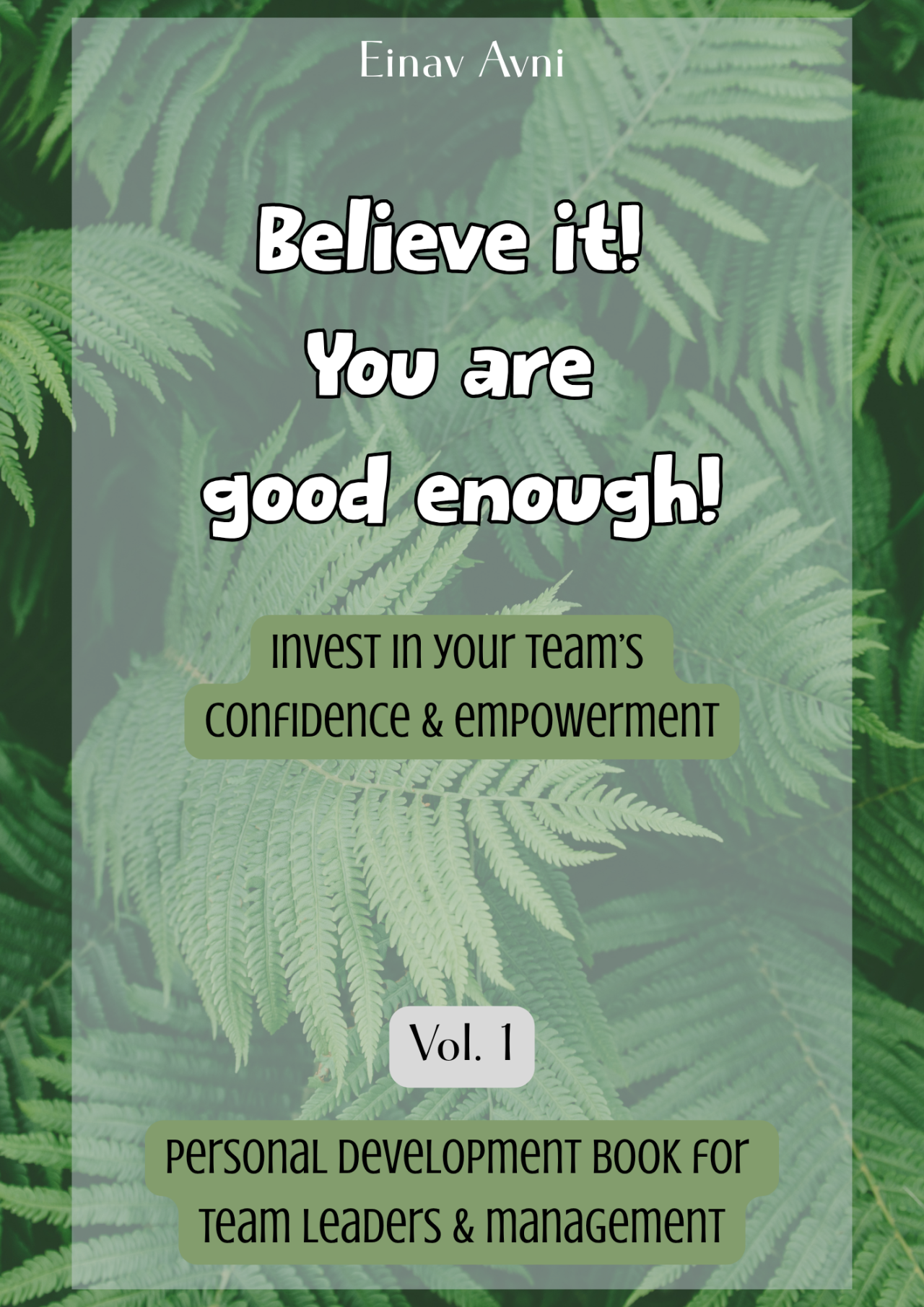 | 6ac8cc195e83a_lg.png) |
| You are limitless: Play to your strengths | Believe it! You are good enough! - book | Finding your authentic voice at the workplace |
| The book You Are Limitless: Play to Your Strengths’ sheds light on the prevalent negative self-talk that many individuals engage in, emphasising its detrimental impact on both personal and professional development. It outlines how negativity can become a habitual pattern and guides shifting one's mindset to cultivate a more supportive and constructive inner dialogue. By adopting these strategies, readers can unlock their full potential and enhance not only their individual growth but also that of their team | Believe it! You are good enough! explores the connection between self-worth, authentic confidence and boundaries, and what happens when we create workplaces where people are not only encouraged to feel confident and empowered, but are actually given the space to be so. (digital - Amazon, printed, direct order from me via this link | Discover ways to identify the obstacles your team may encounter with imposter syndrome, people-pleasing tendencies, or conflict avoidance, and learn how you can support and empower them effectively. Find practical tips and strategies in the book to assist individuals in feeling valued and create a positive and efficient work atmosphere that aligns the team towards achieving success.Easy, simple, and effective. You have to try this for yourself to see why energy work is the true medicine of the future! |
**
I work extensively with people to help them transform their lives from fears, limitations and compromises to harmony, alignment and joy, or in other words, helping people find natural healing to mind, body and soul.
To chat about your own situation and how my methods can help, please book a chat using the link: https://calendly.com/einav-4/coaching-discovery-call
einav x